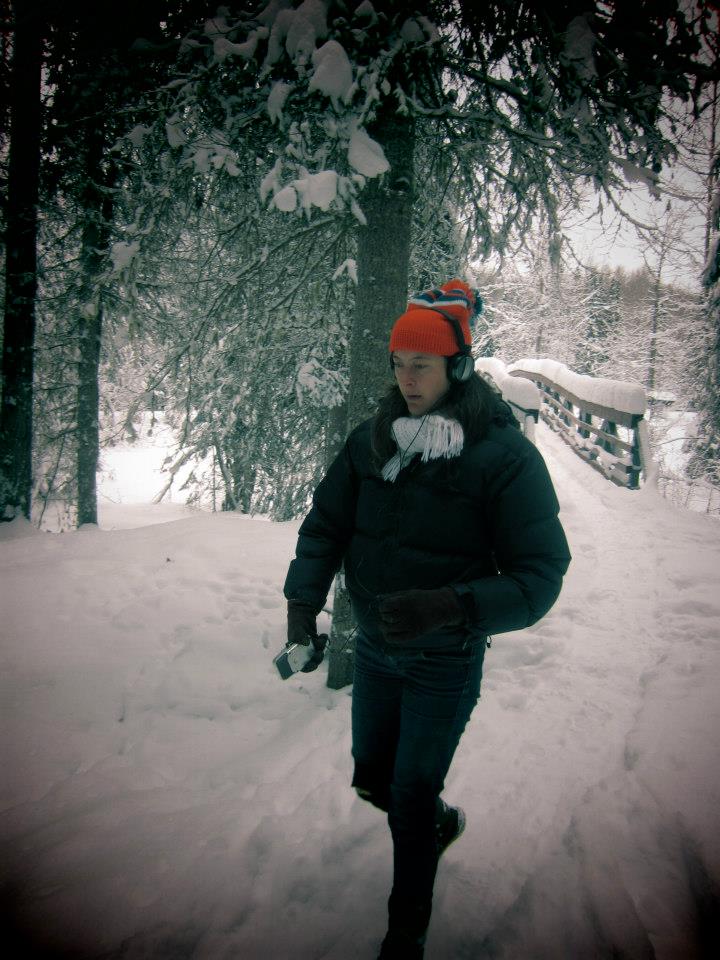
Say the Names...

Al Purdy wrote a wonderful poem called "Say the names say the names" which celebrates the names of Canadian rivers - Tulameen, Kleena Kleene, Similkameen, Nahanni, Kluane and on and on in a celebratory song.

Enbridge is planning to build a dual pipeline that will carry bitumen and condensate across hundreds of waterways between Edmonton and Kitimat. Some of these waterways are rivers like the Parsnip (or what's left of it), the Nechako, the Morice and others are smaller creeks whose names are often known only to the folks who live along their banks or who fish in their shadows or who bend to wash or drink as they cross paths.

I want to collect the names of these rivers and creeks, to collect your stories, your poems, your songs so we can collectively give voice to the land living under the line Enbridge plans to draw.

People have also sent me copies of their presentations to the community oral presentations. If you'd like to add your voice, email me (sheila.peters900@gmail.com) your stories and I'll post them for you. The copyright remains with you.

All the best.
Sheila Peters

Monday, February 4, 2013

Congratulations to the BC Home Team!

The Super Bowl is played in a matter of hours. The residents of BC have been fighting to have their voices heard by the Joint Review Panel for many months.

Some wonderful person tallied the results from the JRP community presentations and we're pleased to announce a winner - of the 1161 people who made it through the complicated process to speak, only two spoke in favour of the Enbridge proposal.

Thanks to all the people who did speak - your stories and understanding and knowledge - your hearts are on record.

Bravo!

Tuesday, January 29, 2013

Sacred Headwaters - Skookum Wawa

As the oral statements at the so-called public hearings of the Joint Review Panel wrap up, we all need a little encouragement to overcome the depressing spectacle of locked doors and police officers surrounding this increasingly bizarre process. On Feb. 2, communities of the northwest will be gathering in Terrace to celebrate the withdrawal of Shell's plans to drill for coal bed methane in the Sacred Headwaters. Congratulations to all of those who worked so hard to pull this off - and thanks for all you're doing to help fight this next threat to the last wild salmon watersheds in BC.

When Ali Howard was swimming the length of the Skeena to draw attention to the threats Shell's plans presented, I wrote this poem to celebrate her achievement. Those of you from points inland might need a bit of background for the Chinook terms. I grew up on the south coast of BC where Chinook terms were commonplace: The ocean was the salt chuck; the wild rapids near Egmont on the Sechelt Peninsula  are called Skookum Chuck, which means powerful water. In 1975, Gary Geddes edited a collection of writing about the northwest, which he fittingly titled Skookum Wawa - powerful talk.

Skookum Wawa


Mountains.
Green meadows.
Spring grizzly grazing
in water welling through rooted sedges.
Waiting water
meanders until flatness finally falls,
falls in three directions.
Water becoming:
becoming Spatsizi, becoming Stikine, becoming Tahltan
becoming Nass, becoming Nisga’a
becoming Skeena, becoming Gitxsan, becoming Tsimshian,
the ancient submerged heart pumping
            oxygen
            salmon
            life into this land.

Bright children leap laughing
to fall, to follow,
to trace in faith one great artery on its way
into the wide arms
of the salt chuck.
Chinook talk
their talk
skookum wawa.

Monday, January 21, 2013

4000 Reasons Not to Build the Northern Gateway Pipeline


4000 Reasons Not to Build the Northern Gateway Pipeline (via Desmogblog)

The Northern Gateway Pipeline Community Hearings are nearly complete, with two remaining sessions scheduled in Kelowna and Vancouver at the end of this month. Come February, the Joint Review Panel will move into the "Questioning Phase" of the final hearing, scheduled to end in May of this year.  The…

Friday, January 18, 2013

Salmon Chowder - Architect Theatre

Georgina, Jonathan, Anita, and Jennifer are inviting you to come and join us for an Information Session/Salmon Chowder Evening!

On Thursday, January 24, we will share some of the recorded interviews we conducted on our journey throughout Northern BC. We will share experiences from the trip, answer your questions, and serve you salmon chowder.

It's a free event!
But please RSVP to
contact@architecttheatre.com
by January 21.

Looking forward to having you there. If you can't make it to Vancouver, feel free to extend the invitation and send someone in your stead!

SALMON CHOWDER Show-And-Tell
Thursday, January 24
5.00pm - 7.00pm
The Russian Hall
600 Campbell Avenue
Vancouver, BC


Join our Facebook Event Page.

Monday, December 31, 2012

Resolve to stand firm, together, in 2013.

I had a wonderful visit in mid-December from a two of the actors (Georgina Beaty and Anita Rochon) from Architect Theatre working on The Pipeline Project, which is a theatre development project about, you guessed it, Enbridge's Northern Gateway proposal.

They were on the road through northern BC in November and December and came to spend a couple of hours in Driftwood Canyon. We (I!)talked as we walked across the arched bridge over Driftwood Creek and later over a cup of tea back around our kitchen table. It made me realize how long I’d been living here, how many environmental projects we’d been involved in over those years, and how the stories are still the same. Threats of economic disaster if we don’t do what is being asked of us, while industry insists that what we ask in terms of safeguards or alternatives is impossible. Neither has proved true.

Anita Rochon
(photo courtesy project facebook page)
Telkwa, for example, is still a thriving community even without a coal mine or coal bed methane. It is possible to take the lead out of gasoline, it is possible to shut down beehive burners, and it is possible to create a park in the Babine Mountains. And, praise be, there will be no fracking in the Sacred Headwaters.

This last important victory demonstrates that it is also possible for First Nations to work with the non-native community – both on economic projects like the Kyahwood Forest Products and the sale of salmon at Moricetown and on environmental campaigns to protect wild salmon from fish farms or oil spills.

This was not the case when I moved to Smithers in 1977. It was still a regular practice for the fire chief to ask town council for permission to have his crew practice burning down “derelict” buildings – buildings that were often shelters for otherwise homeless Wet’suwet’en. It was not uncommon for Wet’suwet’en to be asked to leave stores and restaurants. Back when they were called Carriers.

Things have, in many ways, changed. Beautiful totem poles stand in front of Smithers Secondary and Northwest Community College. The Office of the Wet’suwet’en is located in downtown Smithers. The Dze L K’ant Friendship Centre owns the building that used to house the jail. School District 54 has just published Niwhts'ide'ni Hibi'it'en – The Ways of Our Ancestors: Witsuwit’en History and Culture Throughout the Millennia. 


Turn the crank and you can hear, among other things, a Wet'suwet'en greeting here at Driftwood Canyon Provincial Park.
(photo courtesy project facebook page) 

The Wet’suwet’en went through a long process educating both themselves and our community about their history and culture. Work began in earnest in 1984 when the Gitxsan and Wet’suwet’en launched a suit that claimed ownership and jurisdiction over their territory and led to an exhaustive recording of traditional knowledge that has left us all the richer. Even though Chief (sic) Justice Allan McEachern wrote an insulting decision denying even their existence as a people, the process of gathering that information, of talking to each other, had a very powerful and positive effect. We all knew what had happened in the past, knew that steps had to be taken to repair the injustices of that past. And the Wet’suwet’en demonstrated clearly that they still existed and held onto many political and cultural practices we had pretended were in the past. The Supreme Court’s overturning of McEachern’s decision on Delgamuukw and Gisday Wa was welcome, of course, but a transformation had begun.

Which brings me to the Northern Gateway Joint Review Panel. While it will be disappointing, we shouldn’t be surprised if the panel makes a decision as insulting and misinformed as McEachern’s was. But it will be too late.  We have listened to the oral presentations from community members and read the technical evidence and cross-examinations from interveners. We have spoken to each other and there is no going back. We have heard hundreds of stories from across the province and we know how many of us oppose this project. We have educated ourselves and each other about the sham economics of the project and the environmental impacts of tar sands expansion, pipeline construction and oil spills both globally and locally. We cannot “unknow” this.

This is part of what I said as I poured tea for two young actors sitting around a table that had seen hard labour in the offices of the Telkwa Foundation, the Smithers Human Rights Society, and the home of Walter and Peggy Taylor, people who stood up against social and environmental injustice throughout their long lifetimes. We are honoured to be able to sit at this table every day and gather energy from those who have come before us.

So raise a toast to what we’ve learned this past year, and make a resolution to stand firm, together, in 2013.

Wednesday, October 24, 2012

Save all our coasts

Our travels have brought us (via Via's the Ocean) all the way to Halifax. This morning we were missing the Smithers Save our Coast event so we mounted our own little demo at the Halifax (very industrial) harbour.

Friday, October 19, 2012

The Widening Gyre


We were driving (yes, driving) across the prairies, often sandwiched between semis carrying heavy machinery, steel pipes, or huge plastic barrels; pickups carrying men and equipment to service oil wells, pumping stations; vehicles rumbling into tank farms or out to the grain fields peppered with black tanks and pumping stations. The arteries of oil. 

All of that big sky, big wind and only one or two old windmills on the whole route; it wasn’t until we drove past Sault Ste. Marie in Ontario that we came across solar panels, a huge field of them. And in Shelburne, at the base of the Bruce Peninsula, a line of ghostly windmills, their ponderous blades revolving in and out of sight through the fog. 

Driving, people say. You need oil just like the rest of us. In other words, shut up. As if it’s all or nothing. As if we have to accept whatever the oil industry does without question. As if the questioning doesn’t have any impact on production methods, cleaner processing, or more efficient use. 

But this isn’t what I want to say. With all this activity, it seems as if we’re all chasing our own tails. If  we put the oil produced on one side of the equation and all the energy that went into the oil extraction and refining processes, into the trucks driven, the steel manufactured to make those trucks, the equipment, the pipelines, the tanks, the drills, flying the workers back and forth to the oil and gas fields, well, what is the net energy gain? The estimates range from 1.5/1 to 5/1 for tar sands oil– that means for every unit of energy put into the process, from 1.5 to 5 units of energy are produced, a much lower amount than in the past. This, of course, doesn’t take into account the carbon footprint, the pollution of downstream ground and river water, the air and ground pollution as the oil is burned, the plastic manufactured from that oil settling into the landfills, snagging on trees, washing up on beaches, killing seabirds and other creatures. 

Petroleum is used to make a million things – some of them valuable and useful, others junk. There is a a range of ideas about what is wasteful, what is useful, and what is essential, but we can all question ourselves when we pick up a packet of 300 brightly-coloured hair elastics for $1.99 or ask for a plastic bag to hold the plastic bag holding 100 extra strength garbage bags we’re buying so we have a place to put the plastic packaging we’re going to throw out. You just have to see Chris Jordan’s amazing photographs of albatross chicks who died from eating a colourful diet of plastic whirling in the Pacific gyre Chris Jordan's amazing photographs to realize how far-reaching and destructive this is.It makes Yeats’ “Second Coming” all the more prescient.

Turning and turning in the widening gyre
The falcon cannot hear the falconer;
Things fall apart; the centre cannot hold;
Mere anarchy is loosed upon the world,
The blood-dimmed tide is loosed, and everywhere
The ceremony of innocence is drowned;
The best lack all conviction, while the worst
Are full of passionate intensity.