Say the Names...

Al Purdy wrote a wonderful poem called "Say the names say the names" which celebrates the names of Canadian rivers - Tulameen, Kleena Kleene, Similkameen, Nahanni, Kluane and on and on in a celebratory song.

Enbridge is planning to build a dual pipeline that will carry bitumen and condensate across hundreds of waterways between Edmonton and Kitimat. Some of these waterways are rivers like the Parsnip (or what's left of it), the Nechako, the Morice and others are smaller creeks whose names are often known only to the folks who live along their banks or who fish in their shadows or who bend to wash or drink as they cross paths.

I want to collect the names of these rivers and creeks, to collect your stories, your poems, your songs so we can collectively give voice to the land living under the line Enbridge plans to draw.

People have also sent me copies of their presentations to the community oral presentations. If you'd like to add your voice, email me (sheila.peters900@gmail.com) your stories and I'll post them for you. The copyright remains with you.

All the best.
Sheila Peters

Showing posts with label Sacred Headwaters. Show all posts

Wednesday, March 12, 2014

Peter von Tiesenhausen


from Peter von Tiesenhausen's The Watchers/Journey


It's been an overwhelming few months in the pipeline world that we're being dragged into here in northwestern BC. Frankly, it wasn't so much the JRP's recommendation that Enbridge's Northern Gateway pipeline be granted permission to proceed (with over 200 conditions) that overwhelmed me, but rather the plate of spaghetti that constitutes the "plans" for LNG pipelines revealed by a myriad of applications.

It's been our provincial governments touting of LNG as clean energy, even though it is a fossil fuel that has an enormous carbon footprint.

Most particularly it's the knowledge that LNG pipelines = fracking and all that entails: fracking both in ever increasing amounts in the beleaguered northeast, and inevitably (well, not really, I refuse to accept that) into this part of the country.

It's times like this you wonder: what is the point of writing poems, stories, and songs, of creating images and performing acts of wonder, love and encouragement? We're toast, we're hooped, we're fracked.

But then I remembered Peter von Tiesenhausen and cheered right up. He's a visual artist based in northern  Alberta whose work challenges the way in which the fossil fuel industry wreaks havoc on our idea of home: In a review of his work in Canadian Art, Robin Laurence writes: 


The petroleum industry, of course, casts a long shadow across the region. One of von Tiesenhausen’s legal strategies for resisting the industry’s incursions involved making a claim of copyright to the land on which he has installed a number of his environmental sculptures. It’s the land he grew up on, the land that used to belong to his parents, the land on which he and his family live and work.

Laurence goes on to discuss the way von Tiesenhausen creates alternative ways of seeing home: 


As Peter von Tiesenhausen tours me through “Elevations,” his solo exhibition at the Art Gallery of Grande Prairie, it is difficult to gauge whether he is more invested in the work on view here or in the new Demmitt Community Centre, an hour’s drive away. The internationally acclaimed environmental artist and activist talks about each—the art that symbolizes a spiritual journey, and the community centre that he has been instrumental in creating—with equal pride, passion, humour and angst. His conversation reveals how his art practice affected the way the community centre was conceived, and vice versa. Some of the images and materials in his mixed-media show, which functions as a mid-life meditation on creative aspiration and the making of meaning, are directly connected to the realization of the building.

Community = the land itself and the creatures that live on it, in it, with it, from it - including people. 

von Tiesenhausen's work includes the evocative The Watchers/Journey and the inspirational Passages. The Watchers consist of a group of charred figures which crossed Canada from 1997-2002, moving from exhibition to exhibition - a spooky and powerful presence wherever they stand. 


Passages charts the course of 100 tiny boats filled with earth from 100 different spots between the Bow River's source and Calgary after their release into the river in 2010. 

Seeing images of the hands holding out the tiny boats and letting them fall into the river reminded me of Ali Howard's first leap into the Skeena near its source in the Sacred Headwaters. Art and action bring us together and give us courage. Thanks to all of you who keep our hearts whole while we struggle to slow down the craziness.


The petroleum industry, of course, casts a long shadow across the region. One of von Tiesenhausen’s legal strategies for resisting the industry’s incursions involved making a claim of copyright to the land on which he has installed a number of his environmental sculptures. It’s the land he grew up on, the land that used to belong to his parents, the land on which he and his family live and work. - See more at: http://www.canadianart.ca/reviews/2013/02/06/peter-von-tiesenhausen/#sthash.0mJ9YULL.dpuf
Tuesday, January 29, 2013

Sacred Headwaters - Skookum Wawa

As the oral statements at the so-called public hearings of the Joint Review Panel wrap up, we all need a little encouragement to overcome the depressing spectacle of locked doors and police officers surrounding this increasingly bizarre process. On Feb. 2, communities of the northwest will be gathering in Terrace to celebrate the withdrawal of Shell's plans to drill for coal bed methane in the Sacred Headwaters. Congratulations to all of those who worked so hard to pull this off - and thanks for all you're doing to help fight this next threat to the last wild salmon watersheds in BC.

When Ali Howard was swimming the length of the Skeena to draw attention to the threats Shell's plans presented, I wrote this poem to celebrate her achievement. Those of you from points inland might need a bit of background for the Chinook terms. I grew up on the south coast of BC where Chinook terms were commonplace: The ocean was the salt chuck; the wild rapids near Egmont on the Sechelt Peninsula  are called Skookum Chuck, which means powerful water. In 1975, Gary Geddes edited a collection of writing about the northwest, which he fittingly titled Skookum Wawa - powerful talk.

Skookum Wawa


Mountains.
Green meadows.
Spring grizzly grazing
in water welling through rooted sedges.
Waiting water
meanders until flatness finally falls,
falls in three directions.
Water becoming:
becoming Spatsizi, becoming Stikine, becoming Tahltan
becoming Nass, becoming Nisga’a
becoming Skeena, becoming Gitxsan, becoming Tsimshian,
the ancient submerged heart pumping
            oxygen
            salmon
            life into this land.

Bright children leap laughing
to fall, to follow,
to trace in faith one great artery on its way
into the wide arms
of the salt chuck.
Chinook talk
their talk
skookum wawa.

Monday, December 31, 2012

Resolve to stand firm, together, in 2013.

I had a wonderful visit in mid-December from a two of the actors (Georgina Beaty and Anita Rochon) from Architect Theatre working on The Pipeline Project, which is a theatre development project about, you guessed it, Enbridge's Northern Gateway proposal.

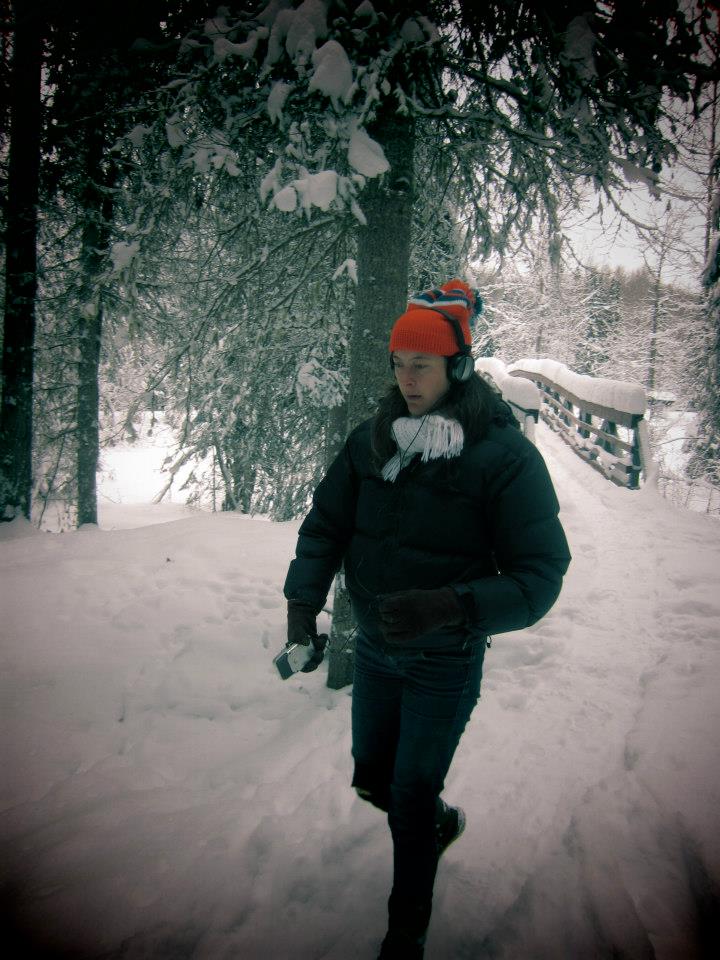
They were on the road through northern BC in November and December and came to spend a couple of hours in Driftwood Canyon. We (I!)talked as we walked across the arched bridge over Driftwood Creek and later over a cup of tea back around our kitchen table. It made me realize how long I’d been living here, how many environmental projects we’d been involved in over those years, and how the stories are still the same. Threats of economic disaster if we don’t do what is being asked of us, while industry insists that what we ask in terms of safeguards or alternatives is impossible. Neither has proved true.

Anita Rochon
(photo courtesy project facebook page)
Telkwa, for example, is still a thriving community even without a coal mine or coal bed methane. It is possible to take the lead out of gasoline, it is possible to shut down beehive burners, and it is possible to create a park in the Babine Mountains. And, praise be, there will be no fracking in the Sacred Headwaters.

This last important victory demonstrates that it is also possible for First Nations to work with the non-native community – both on economic projects like the Kyahwood Forest Products and the sale of salmon at Moricetown and on environmental campaigns to protect wild salmon from fish farms or oil spills.

This was not the case when I moved to Smithers in 1977. It was still a regular practice for the fire chief to ask town council for permission to have his crew practice burning down “derelict” buildings – buildings that were often shelters for otherwise homeless Wet’suwet’en. It was not uncommon for Wet’suwet’en to be asked to leave stores and restaurants. Back when they were called Carriers.

Things have, in many ways, changed. Beautiful totem poles stand in front of Smithers Secondary and Northwest Community College. The Office of the Wet’suwet’en is located in downtown Smithers. The Dze L K’ant Friendship Centre owns the building that used to house the jail. School District 54 has just published Niwhts'ide'ni Hibi'it'en – The Ways of Our Ancestors: Witsuwit’en History and Culture Throughout the Millennia. 


Turn the crank and you can hear, among other things, a Wet'suwet'en greeting here at Driftwood Canyon Provincial Park.
(photo courtesy project facebook page) 

The Wet’suwet’en went through a long process educating both themselves and our community about their history and culture. Work began in earnest in 1984 when the Gitxsan and Wet’suwet’en launched a suit that claimed ownership and jurisdiction over their territory and led to an exhaustive recording of traditional knowledge that has left us all the richer. Even though Chief (sic) Justice Allan McEachern wrote an insulting decision denying even their existence as a people, the process of gathering that information, of talking to each other, had a very powerful and positive effect. We all knew what had happened in the past, knew that steps had to be taken to repair the injustices of that past. And the Wet’suwet’en demonstrated clearly that they still existed and held onto many political and cultural practices we had pretended were in the past. The Supreme Court’s overturning of McEachern’s decision on Delgamuukw and Gisday Wa was welcome, of course, but a transformation had begun.

Which brings me to the Northern Gateway Joint Review Panel. While it will be disappointing, we shouldn’t be surprised if the panel makes a decision as insulting and misinformed as McEachern’s was. But it will be too late.  We have listened to the oral presentations from community members and read the technical evidence and cross-examinations from interveners. We have spoken to each other and there is no going back. We have heard hundreds of stories from across the province and we know how many of us oppose this project. We have educated ourselves and each other about the sham economics of the project and the environmental impacts of tar sands expansion, pipeline construction and oil spills both globally and locally. We cannot “unknow” this.

This is part of what I said as I poured tea for two young actors sitting around a table that had seen hard labour in the offices of the Telkwa Foundation, the Smithers Human Rights Society, and the home of Walter and Peggy Taylor, people who stood up against social and environmental injustice throughout their long lifetimes. We are honoured to be able to sit at this table every day and gather energy from those who have come before us.

So raise a toast to what we’ve learned this past year, and make a resolution to stand firm, together, in 2013.